
Bulk edible oil transport, from storage to production
Sunflower, rapeseed, corn and other vegetable oils need equipment selected for the exact product and receiving site. We coordinate tanker transport in Türkiye through contracted carriers, with food use and tank history considered before allocation.
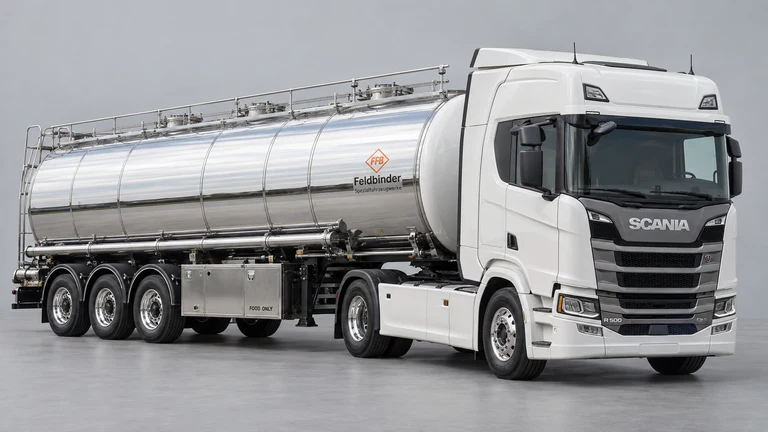
- Tank use
- Dedicated to food products
- Product details
- Oil type and processing stage
- Hygiene
- History and cleaning records
- Quantity
- Weight, volume and density

Bulk vegetable oil
Crude oil for refining and refined oil for filling have different acceptance criteria. Identify the oil, processing stage and any temperature requirement in your enquiry.
An edible oil shipment is planned around the buyer's quality specification, not just the distance between two sites. Residues, an unsuitable previous cargo or the wrong temperature can affect acceptance even when the vehicle arrives on time. The loading and receiving teams should therefore agree on the product, tank and release documents before dispatch.
Our role is to bring the shipment requirements together with a suitable contracted tanker. We ask for the exact oil, its intended use, both addresses and the delivery window. International enquiries need a separate route and carrier assessment; the information on this page does not establish an export service.
1. Identify the oil and its processing stage
Sunflower, rapeseed, corn, soybean and palm-based products should not be treated as one interchangeable cargo. State whether the oil is crude, refined or a specific fraction or blend. A refinery receiving crude oil and a food plant receiving refined oil may apply different acceptance criteria, sampling arrangements and previous-cargo restrictions.
Include the product specification and any buyer conditions relating to odour, residues, allergens or product segregation. If separate grades are requested on one journey, each compartment and its discharge system must be assessed for separation. A divided tank alone does not prove that two products can be delivered without cross-contact.
2. Select a food-dedicated tanker
For food movements, we consider tanks dedicated to food use. Tank allocation is not based on external appearance: the product-contact surface, valves, seals, hoses and pump must all satisfy the product and site requirements. A chemical or fuel tank is not offered as an edible oil tank simply because it has been washed.
Ask the receiving site to confirm its accepted equipment before a vehicle is arranged. Requirements may cover stainless-steel contact surfaces, compartment layout, connections, seals and the use of a vehicle-mounted pump. Written acceptance criteria let the carrier check an actual tank against the cargo instead of relying on the broad description food tanker.
3. Review cleaning records and previous cargoes
The preparation file should include the tank identification, previous-cargo information requested by the buyer and the relevant cleaning record. Check that the documents relate to the equipment arriving for loading. Where the buyer asks for the previous three cargoes or a specific cleaning station, record that condition when requesting the vehicle.
An EFTCO Cleaning Document records cleaning operations; it is not a universal certificate of suitability for every food. The loading site's acceptance decision also considers the product, tank history and contact equipment. Any uncertainty about a previous cargo or an incomplete record should be resolved before loading, with the responsible parties agreeing the next step.
4. Plan temperature around the oil specification
Different oils and fractions have different flow and quality requirements. Some can be handled without heating under the planned conditions; others need insulation or a defined temperature regime to remain suitable for discharge. Use the supplier's instructions and the buyer's acceptance range rather than one temperature setting for every vegetable oil.
The plan should account for the journey, weather, possible waiting and the receiving appointment. Heating capability does not replace a temperature plan, and unnecessary heating can affect product quality. Share both the expected loading condition and the required delivery condition so that the equipment and timing can be considered together.
5. Confirm tonnes, litres and the measurement basis
If your order is in litres, provide the density and reference temperature used for the conversion. If it is in tonnes, say whether the quantity is a target or a firm delivery requirement. Available tank volume, permissible vehicle mass, axle loading and the tank's loading restrictions must all be considered; a nominal tank size is not a guaranteed payload.
Agree how loading and delivery quantities will be recorded, for example through the sites' weighing arrangements. Keep the product grade, tank identification, seal details and quantity records linked to the same shipment. Where a difference is reported, the parties can review the measurement basis and retained product rather than immediately assuming a transport loss.
6. Check the receiving site's discharge arrangements
Before dispatch, confirm the destination has the storage space and appointment needed for the full delivery. Ask for the connection type, hose reach, pump arrangement and any restriction on the discharge method. A request for a particular method must be reviewed for product quality, equipment compatibility and the site's procedures before it is accepted.
The receiving team should explain its document review, sampling and product-release process, including who authorises discharge. Include realistic time for these steps in the vehicle schedule. If access, acceptance temperature or equipment availability changes, notify the carrier before arrival so the delivery can be reassessed instead of improvised at the unloading point.
7. Prepare a shipment enquiry and compare its scope
The cost assessment includes the loading and delivery addresses, quantity, tank preparation, empty positioning, any temperature requirements and expected waiting. Regular shipments can be discussed as a programme, but an unconfirmed return load should not be assumed when comparing prices. Ask what each quotation includes and how additional waiting or changed delivery conditions would be treated.
For an export enquiry, add the destination country, buyer's bulk acceptance conditions, delivery terms and customs responsibilities. Our international routes are still under research. Product information helps establish feasibility, but vehicle availability, authority and the service scope must be confirmed separately before a shipment or price commitment is agreed.
Read the guide to preparing liquid cargo exports from Türkiye
Discuss an edible oil shipment
Send the oil specification and both site addresses. Mark any requirement that is still being confirmed with the buyer.
- Oil type, crude or refined status, and intended food use
- Quantity in tonnes or litres, density and reference temperature
- Loading point, destination and delivery window
- Previous-cargo and cleaning-document requirements
- Loading and delivery temperature conditions
- Pump, connection, sampling and storage arrangements
Send your shipment details
WhatsApp and email open a message draft with this product selected. Add your details, review the message and send it when ready.
Please send shipment details in writing. International route availability is still under review.